2025-12-29 · 3 min read
Use sunblock on vacation for post-vacation good looks
Holidays concentrate a lot of UV into a short period. What to pack, how often to reapply, and why "sunblock" is a word that no longer appears on US labels.
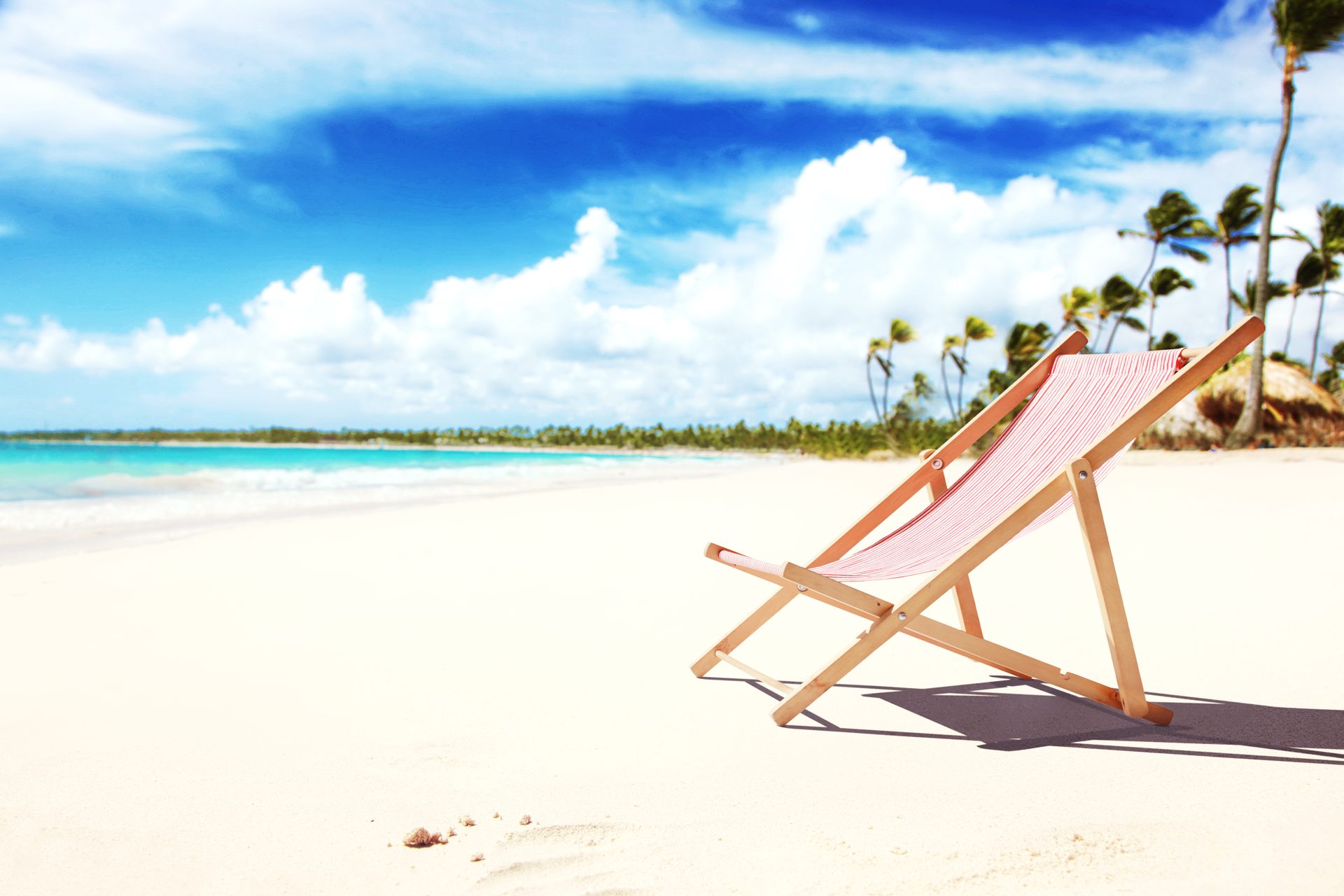
A holiday is time away from routine, and it is also when most people spend far more of the day outdoors than usual. The daily UV dose on a week away can exceed a month of ordinary life, and often at a latitude or altitude where the sun is stronger than the one your habits were formed in.
Unprotected, that shows up as sunburn during the trip and as accumulated damage afterwards. The fix is straightforward: sun protection every day of the holiday, not just on beach days.
A note on the word first. "Sunblock" is still in common speech, but the US FDA prohibited it on labels in 2011, along with "waterproof", because it implies total protection that no filter delivers. What you are buying is sunscreen.
- Do not let strong sun dictate your plans; plan the protection instead. Choose SPF 30 or higher, and make sure it says broad spectrum, which is the claim covering UV-A as well as UV-B.
- Most mineral sunscreens use titanium dioxide, zinc oxide or both. Worth correcting a common description: they do not physically obstruct the sun's rays at the skin surface. At cosmetic particle sizes they absorb UV energy and dissipate it as heat, much as organic filters do, with scattering a secondary effect. Both classes work; neither is a shield.
- Apply every day of the trip, including overcast ones. Cloud attenuates UV-A and UV-B to a similar degree, and much of both still gets through on a grey day.
- Travelling with children makes this more important, not less. Children's skin burns more readily, and blistering sunburn in childhood is an established melanoma risk factor. Sunscreen is recommended from six months; below that age, shade and clothing rather than sunscreen.
- Apply about 15 to 30 minutes before going out, and reapply every two hours, not every two to three. Use enough: roughly a teaspoon for face and neck, about 35 ml to cover an adult body.
- Sensitive skin benefits particularly from inorganic filters, which have the lowest sensitisation rate. To be precise about what they do: sunscreen is preventive, not curative. It reduces the UV dose reaching skin; it does not treat damage already done.
- Swimming and water sports call for a water-resistant product (tested for a stated 40 or 80 minutes) and reapplication straight after coming out. Water reflects UV upward, so time in it carries a higher dose than time beside it.
Pack a hat, UV-rated sunglasses and something long-sleeved for midday as well. Clothing is the one form of protection that never needs reapplying. For how much sunscreen to use and when, see application techniques for sunscreens.
Frequently asked
How often should I reapply on holiday?
Every two hours of sun exposure, and immediately after swimming, heavy sweating or towelling. Water resistance is tested for a stated 40 or 80 minutes; it delays removal rather than preventing it.
Why is the sun stronger on holiday?
Usually latitude, altitude or reflectance. UV intensity rises sharply closer to the equator, increases roughly 10% per 1,000 m of altitude, and water and pale sand reflect a substantial additional dose upward.
Is sunscreen safe for young children?
Sunscreen is recommended from six months of age, with inorganic filters such as zinc oxide usually preferred. Below six months, shade and clothing are the recommended approach rather than sunscreen.