2025-12-30 · 3 min read
Application techniques for sunscreens
How much sunscreen to use, when to apply it, and why under-application is the single biggest reason people get less protection than the label promises.
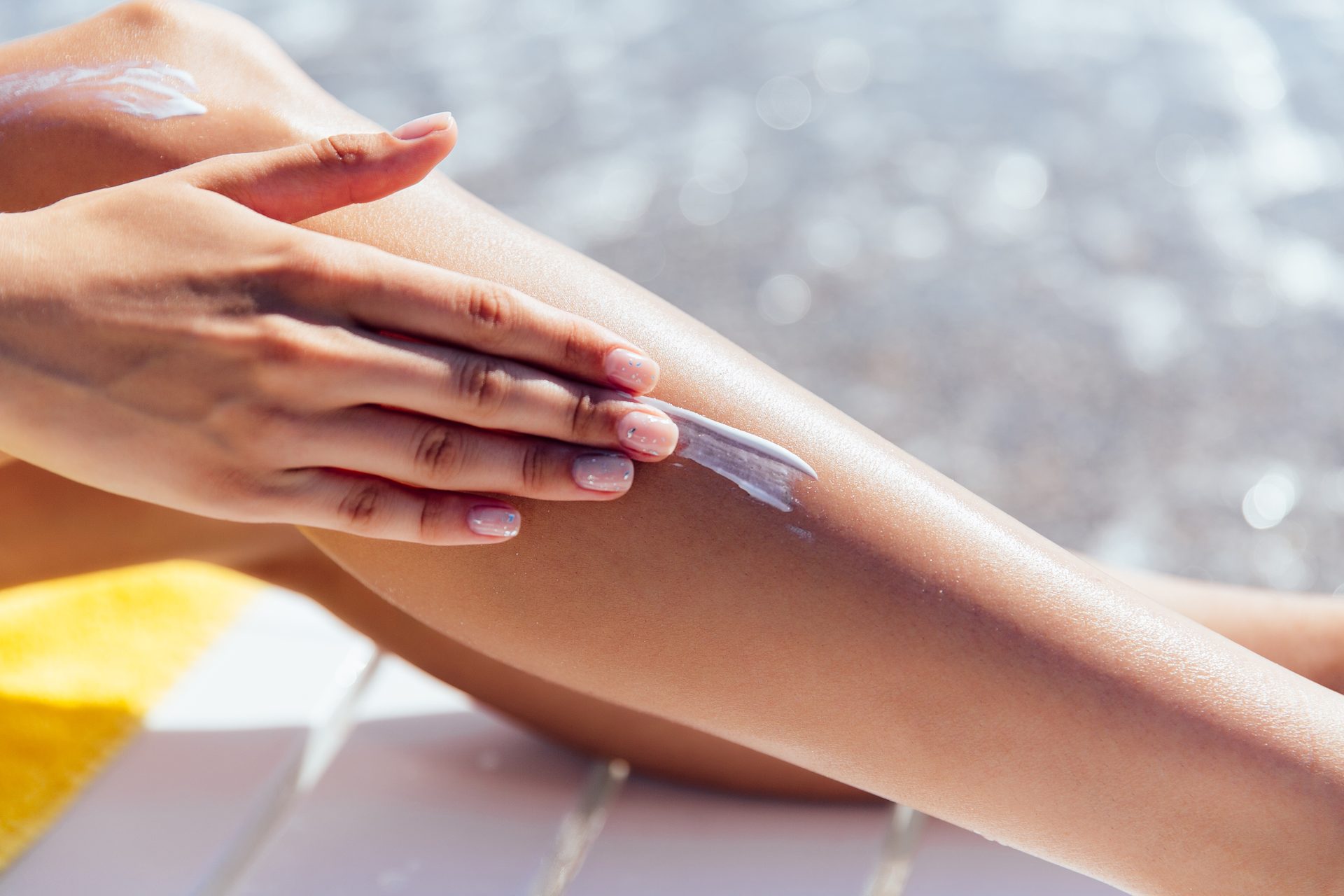
Sunscreen is essential for anyone spending real time outdoors, protecting against sunburn, photo-ageing, mottled pigmentation and, over years, skin cancer risk. But all of that assumes it is applied properly; application, far more than the SPF number, is where most protection is lost.
Here is what the technique requires.
- Start with the right product. SPF 30 as a minimum, and it must say broad spectrum. SPF alone describes UV-B; without the broad-spectrum claim the UV-A band may be poorly covered.
- Use enough: this is the big one. SPF is measured in the laboratory at an application density of 2 mg/cm². For an average adult that is roughly 35 ml, about two tablespoons, to cover the whole body, and about a teaspoon for the face and neck alone. Studies consistently find people apply a quarter to a half of that, and protection falls disproportionately as a result: a nominal SPF 30 applied at half density does not deliver SPF 15. If you think you have used slightly too much, you almost certainly have not.
- Time it. Apply roughly 15 to 30 minutes before exposure, whether the filters are organic or inorganic (zinc oxide and titanium dioxide). The lead time is about film formation: the product needs to spread and dry down into an even, continuous layer. For lips, use a dedicated SPF balm rather than body sunscreen, and reapply it more often, because eating and drinking remove it quickly.
- Do not skip the easily forgotten places. Ears, the back of the neck, the tops of the feet, and, for anyone with thinning hair or bald patches, the scalp. These are common sites for sun damage precisely because they get missed.
- Reapply after water and sweat. Swimming, vigorous exercise and towelling all strip the film. Water resistance is tested for a stated 40 or 80 minutes; it is a delay, not immunity.
- Reapply on a schedule. Roughly every two hours for sustained outdoor exposure, regardless of the SPF on the bottle.
- Shake the bottle first. Suspensions, mineral formulas especially, settle. An unshaken bottle dispenses uneven filter loading, so parts of the film carry less protection than others.
- With sprays, watch coverage. Sprays make even application harder, not easier. Spray close, until the skin visibly glistens, then rub in, and avoid applying them in wind, where much of the dose never lands.
Finally, sunscreen complements the other measures rather than replacing them. Shade, avoiding peak-intensity hours, UPF-rated clothing, a wide-brimmed hat and UV-rated sunglasses all cut dose in ways sunscreen cannot. The notion that sunscreen alone licenses unlimited sun is the one idea most worth discarding. For what the SPF number does and does not tell you, see UV Light, Sunblocks, and SPF.
Frequently asked
How much sunscreen should I apply?
About 2 mg per square centimetre of skin, which is the density SPF is tested at. For an average adult that is roughly 35 ml (two tablespoons) for full-body cover, and about a teaspoon for the face and neck alone. Erring generous costs you nothing.
How long before going out should I apply it?
Around 15 to 30 minutes, for mineral and organic sunscreens alike. The filters absorb UV as soon as they are on the skin; the lead time is for the product to spread and dry down into an even, continuous film.
Does sunscreen replace a hat and shade?
No. Sunscreen is one layer of protection. Shade, timing, UPF-rated clothing, a wide-brimmed hat and UV-rated sunglasses all reduce dose in ways sunscreen cannot, particularly around the eyes and scalp.