2025-12-30 · 4 min read
The chemistry behind hair dyes and hair treatments
How oxidative hair colour works (alkalisers, developer, primary intermediates and couplers) and why PPD allergy makes patch testing non-negotiable.
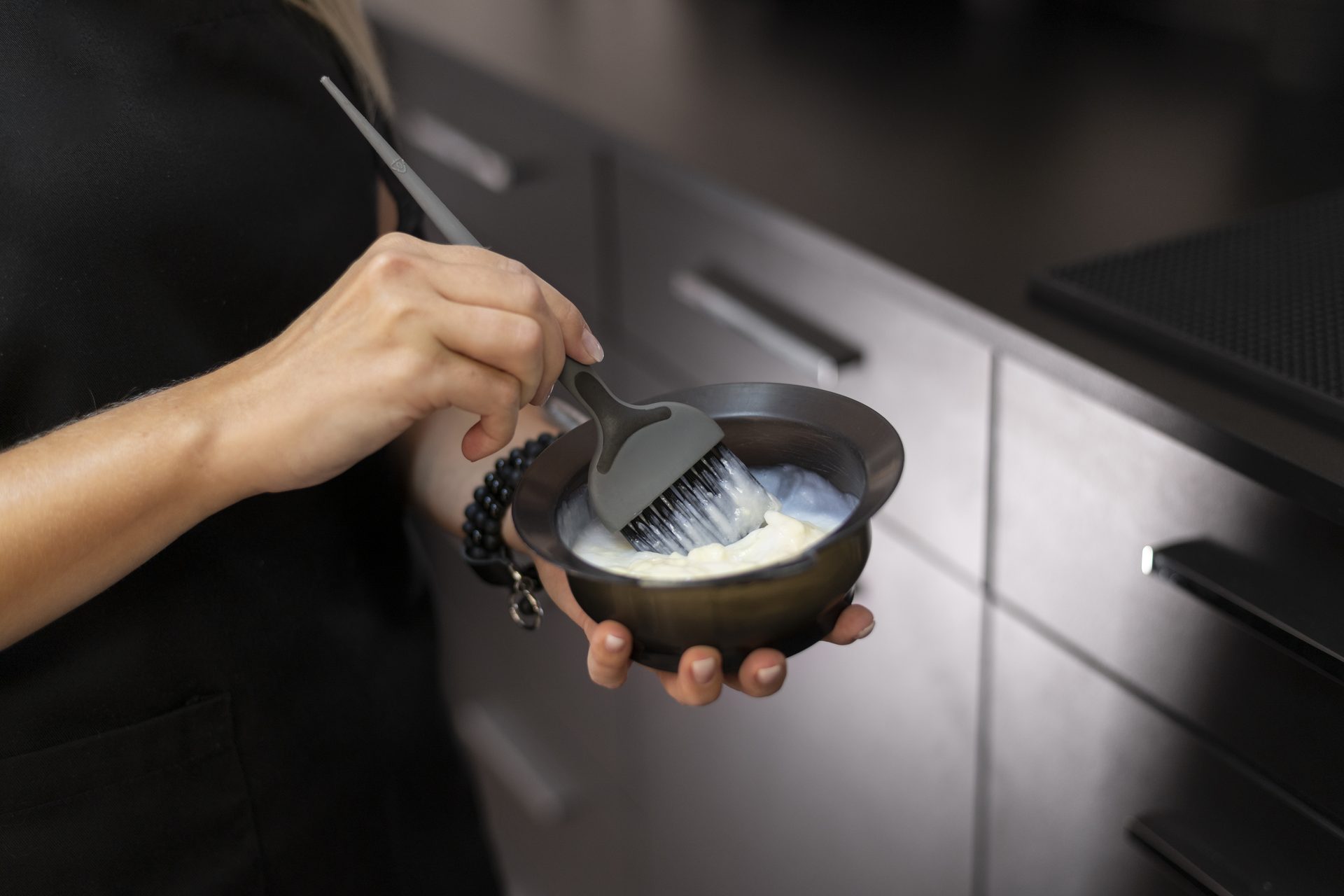
The first commercial hair dye reached the market in 1909, and the category has developed steadily since. Whether the aim is covering grey or changing shade entirely, the colour is the product of a set of chemical reactions taking place inside the hair rather than on it.
How oxidative colour works
The central idea is worth stating before the individual ingredients, because it explains all of them. Permanent hair colour does not deposit pigment. Instead, small, colourless precursors diffuse into the hair cortex, where an oxidant makes them react together to form large coloured molecules that are too big to diffuse back out, which is what makes the colour permanent. The same oxidant simultaneously bleaches the hair's own melanin, which is what allows a shade to be lifted rather than only darkened.
Here are the components that make that happen.
Ammonia
An alkaliser. It raises the pH of the mixture, which swells the hair and lifts the cuticle scales so precursors and developer can reach the cortex. The alkaline environment is also what allows hydrogen peroxide to work efficiently. Ammonia contributes no colour of its own; it opens the door.
Hydrogen peroxide
The developer, and the oxidising agent that does two jobs at once. It oxidises the dye precursors so they couple into coloured molecules, and it bleaches the natural melanin already in the hair. Developer strength (the volume number) determines how much lift you get: higher volume, more melanin destroyed, lighter base.
PPD (para-phenylenediamine)
The classic primary intermediate, in use since the category began and still central to permanent colour, particularly for deep and natural-looking shades. It is small enough to penetrate readily and produces colour with excellent wash fastness, which is why colour-treated hair can be shampooed normally without fading quickly.
It carries a real caveat that no discussion of hair dye chemistry should omit. PPD is a significant contact allergen. Reactions range from scalp irritation and dermatitis to severe facial and eyelid swelling requiring medical attention, and sensitisation can develop suddenly after years of uneventful use. This is why manufacturers instruct a 48-hour patch test before every application (not just the first) and why PPD concentrations in oxidative colour are capped by regulation. Anyone who has reacted to a temporary black henna tattoo should be especially cautious, as those often contain high, unregulated PPD levels and are a known route to sensitisation.
Ethanolamine
The usual alkaliser in ammonia-free colour, and it does the same job less aggressively: it raises pH and swells the cuticle, but less, so there is less structural damage and less odour. The trade-offs are real: less lift, and colour that generally fades sooner. Note that ammonia-free does not mean odourless, and it does not remove the oxidative dye chemistry or the allergy risk, which come from the precursors rather than the alkaliser.
Resorcinol and other couplers
Couplers are the second half of the colour-forming reaction. They have no colour themselves and produce none alone; they react with oxidised primary intermediates, and the specific pairing determines the final shade. Resorcinol tends toward greenish-brown tones, other couplers toward blue or red. This is how a manufacturer builds a shade range from a small set of precursors, by varying which couplers are present and in what ratio.
Preservatives
Like any water-containing cosmetic, hair colour needs protection from microbial growth, and preservative systems are chosen for compatibility with the formula's high pH and oxidative chemistry. Preservation is a safety requirement rather than an optional addition (see the role of preservatives).
Toluene-2,5-diamine
An alternative primary intermediate, usually supplied as the sulfate, and a single compound; it is sometimes miswritten as though it were two. It is used widely, including in products marketed as PPD-free.
It should not be assumed to be safer. Toluene-2,5-diamine is itself a recognised sensitiser, and cross-reactivity with PPD is common: someone allergic to PPD may well react to it. A PPD-free claim is not an assurance for someone with a diagnosed dye allergy, and anyone in that position should see a dermatologist for proper patch testing rather than switching products on the basis of the label.
Understanding what each component does makes it easier to choose sensibly between permanent, demi-permanent and semi-permanent options (see hair dyes and lightening agents).
Frequently asked
How does permanent hair colour work?
Small colourless precursors (primary intermediates and couplers) diffuse into the hair cortex. Hydrogen peroxide then oxidises them so they react together to form large coloured molecules that are physically too big to diffuse back out. The same peroxide simultaneously bleaches the hair's natural melanin.
Is PPD dangerous?
PPD is a well-recognised contact allergen and reactions range from scalp irritation to severe facial swelling requiring medical attention. It is permitted in oxidative hair colour at regulated concentrations, but manufacturers instruct a 48-hour patch test before every application, and that instruction should be followed each time: sensitisation can develop after years of uneventful use.
Is ammonia-free hair colour gentler?
Somewhat, and with a trade-off. Ethanolamine raises pH less aggressively, so it swells the cuticle less and causes less structural damage, but it also gives less lift and less durable colour. It is not odourless and it is not free of the oxidative chemistry that carries the allergy risk.