2025-12-30 · 4 min read
Hair dyes and lightening agents: technical differences for a layperson
Temporary, semi-permanent, demi-permanent and permanent colour compared: how deep each penetrates, how long it lasts, and what bleaching does to hair.
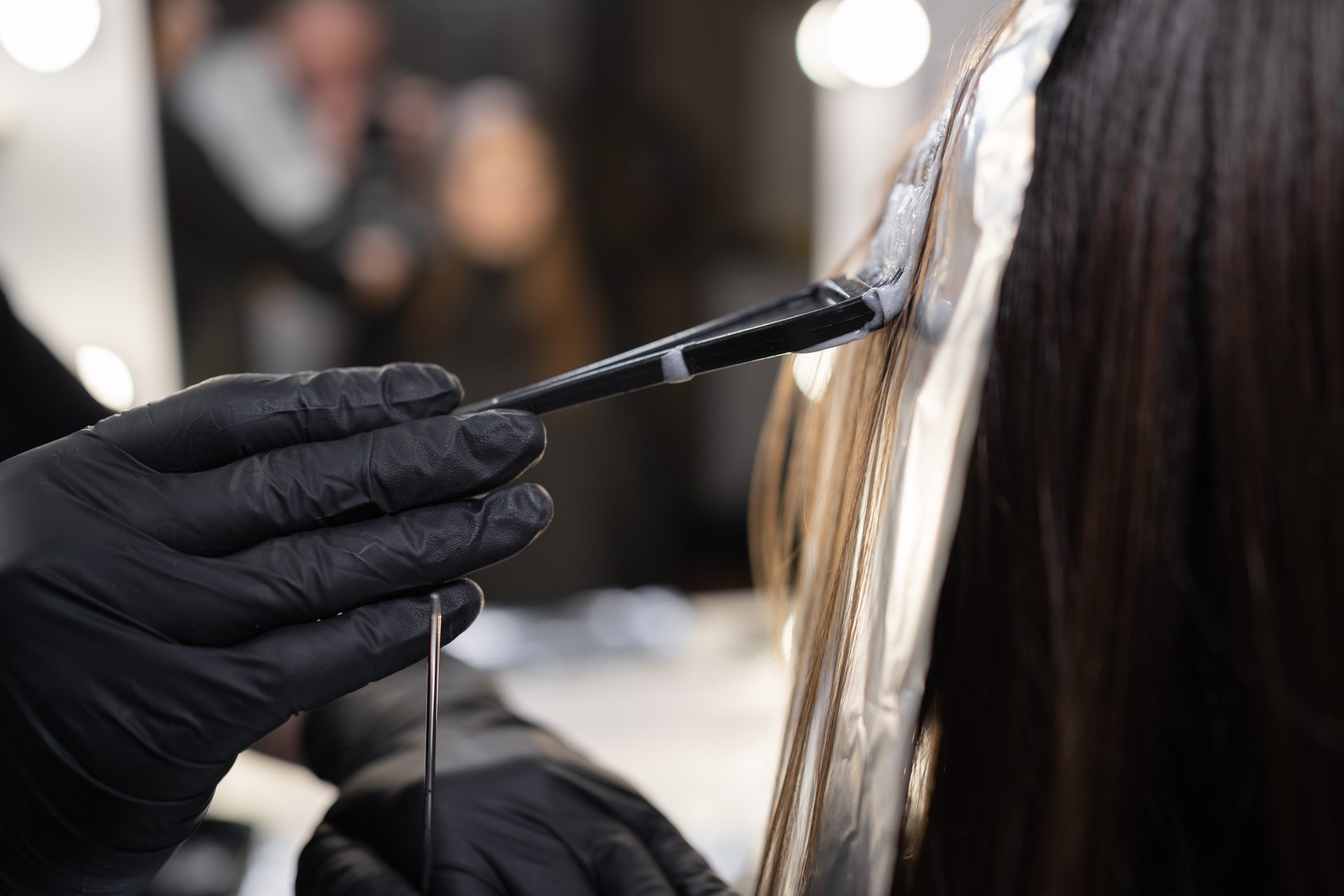
Commercial hair colour has been available for over a century, and the range now on shelf is wide enough to be confusing. The categories are not marketing tiers. They differ in a specific technical way: how far the colour penetrates the hair, and whether it can remove the pigment already there.
Modern formulations are easier to use and less pungent than earlier generations, though ammonia-free products substitute ethanolamine, which has its own odour rather than none.
Temporary hair dye
Colour that sits on the outside. The colourant molecules are large, so they cannot pass through the cuticle; they deposit on its surface. That makes them fast, damage-free and completely reversible: one or two shampoos and the colour is gone.
Useful for a short-term change, an event, or covering grey until the next wash. No ammonia, no peroxide, no lift, and it will transfer onto pillows and collars, particularly in rain.
Semi-permanent hair dye
Smaller molecules that pass through the cuticle into the outer cortex, without any chemical reaction taking place inside the hair. Nothing is oxidised, so the natural colour underneath is unchanged; semi-permanent colour deposits on top of what is there.
Typically lasts 8 to 10 shampoos, fading gradually rather than growing out with a line. It covers grey partially (often around half) because grey hair lacks the pigment that makes deposited colour read as intended. Free of ammonia and hydrogen peroxide, so it is the gentlest of the penetrating options.
Demi-permanent hair dye
A step further. Demi-permanent uses a mild alkaliser (usually ethanolamine rather than ammonia) with a low-volume peroxide developer, so genuine oxidative colour formation happens inside the hair, but gently.
The defining limitation is that it cannot lighten. There is not enough peroxide to destroy natural melanin, so demi-permanent colour can darken, tone, enrich, blend grey and neutralise unwanted warmth, but it cannot take a shade lighter than the base. It lasts roughly 15 to 20 shampoos and fades softly, which suits people who dislike a hard regrowth line.
Permanent hair dye
The only category that can lighten. It combines an alkaliser (ammonia or ethanolamine) with a higher-volume peroxide developer and oxidative dye precursors.
Two things happen at once inside the cortex. The peroxide bleaches the natural melanin, and it oxidises the precursors (PPD or toluene-2,5-diamine as primary intermediates, plus couplers) so they react into large coloured molecules trapped in place. Full grey coverage, and colour that lasts until it grows out. A root touch-up is generally needed every six to eight weeks; the colour on the lengths does not wash away, though it can oxidise and shift over time.
Because this category uses oxidative precursors, the 48-hour patch test applies, before every application rather than only the first. See the chemistry behind hair dyes.
Hair lightening
Bleaching removes pigment rather than adding it. Persulfate salts with hydrogen peroxide oxidise the melanin in the cortex into colourless fragments small enough to wash away.
The characteristic warm result has a specific cause. Hair contains two melanins: dark brown-black eumelanin and red-yellow pheomelanin. Eumelanin oxidises faster, so it disappears first and leaves pheomelanin behind: the brassy yellow-orange stage every lightening process passes through. Toners then neutralise that warmth by depositing complementary pigment; they do not remove it.
Bleaching is the most damaging process in hair colouring. It disrupts the cuticle, degrades keratin and breaks disulfide bonds, leaving hair more porous, weaker and more prone to breakage. The effect is cumulative, since damage does not repair.
Choosing
Match the category to the outcome. Going lighter requires permanent colour or bleach; darkening, toning or blending grey is well served by demi- or semi-permanent, with less damage. Hair texture, porosity, condition and previous chemical treatments all affect the result, and a professional colourist is worth consulting for significant changes, particularly on hair that has been bleached or chemically straightened before.
Frequently asked
What is the difference between demi-permanent and permanent colour?
Lift. Demi-permanent uses a mild alkaliser and low-volume peroxide, so it deposits and tones but cannot lighten the natural base. Permanent colour uses a stronger alkaliser and higher-volume developer, destroying natural melanin so a lighter shade is achievable.
Why does bleached hair go orange or yellow?
Because the two melanins break down at different rates. Dark eumelanin is destroyed first, leaving red-yellow pheomelanin behind, which shows as brassy warmth. Toners then neutralise it with complementary pigment rather than removing it.
Do I need a patch test for hair dye?
Yes, for any oxidative colour, and before every application rather than only the first. PPD and related intermediates are recognised contact allergens, sensitisation can appear after years of uneventful use, and manufacturers specify a 48-hour test.