2025-12-30 · 5 min read
The role of preservatives in cosmetic products
Why any water-containing cosmetic needs preservation, the main systems in use, how challenge testing proves they work, and which "natural" alternatives do not.
Preservation · Formulation · Regulatory
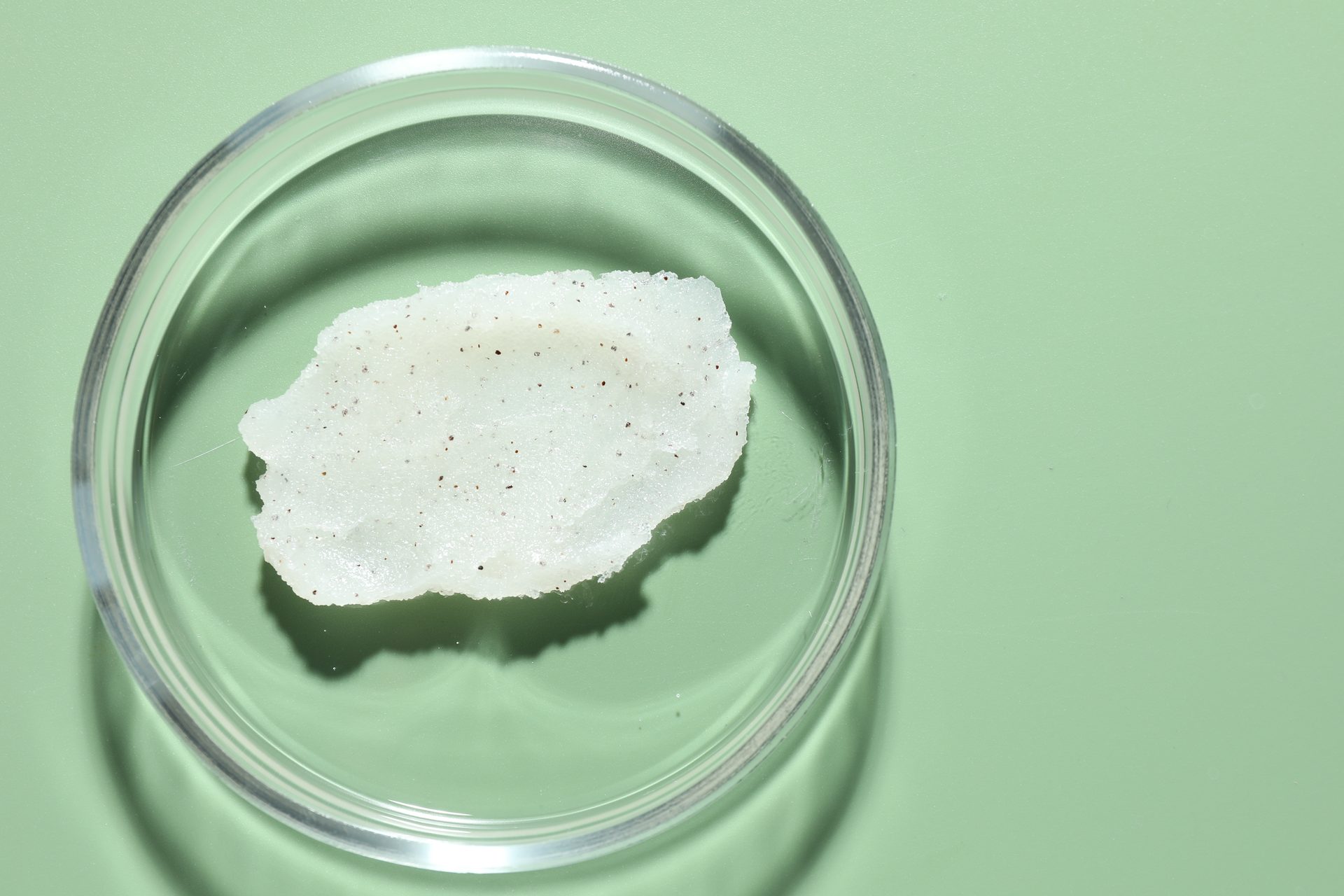
Cosmetics have been part of grooming for millennia, and preservation has been part of the problem for just as long. Every modern water-containing cosmetic needs a preservative system, and that is a safety requirement rather than a formulating convenience.
Why preservatives are needed
Microorganisms need water to grow, and most cosmetics (creams, lotions, shampoos, gels, serums) are largely water. That makes them viable growth media for bacteria, yeasts and moulds.
Contamination arrives from several directions: raw materials, manufacturing equipment, packaging, and above all the consumer, who introduces microorganisms every time fingers go into a jar or an applicator touches skin. A product may be used daily for months, in a warm humid bathroom.
The consequences are not merely aesthetic. Contaminated cosmetics have caused serious eye infections (mascara and eye creams are a particular risk, since the eye is vulnerable and the applicator returns to the pack) as well as skin infections, and infections in broken or compromised skin. Product recalls for microbial contamination happen regularly. This is why seeking out preservative-free products is poor advice: the risk is real, and it falls on the user.
Common preservative systems
Parabens. Esters of para-hydroxybenzoic acid, with broad-spectrum activity, good stability and one of the longest safety records in cosmetics. Methylparaben and ethylparaben remain permitted in the EU and are assessed as safe by the SCCS at regulated concentrations; certain longer-chain parabens are restricted or prohibited. The regulatory position is substance-by-substance, not a judgement on the class.
Phenoxyethanol. Very widely used, effective mainly against bacteria, so it is generally paired with something covering yeasts and moulds. Permitted to 1% in the EU. See VinShield-PE.
Multifunctional glycols and related actives. Caprylyl glycol, ethylhexylglycerin, 1,2-hexanediol and pentylene glycol contribute antimicrobial activity while also acting as humectants or emollients, which is why they appear so often in combination systems.
Formaldehyde releasers. DMDM hydantoin and imidazolidinyl urea release small amounts of formaldehyde, giving broad and robust protection. Effective, but under increasing regulatory pressure, with labelling requirements in the EU where release exceeds a threshold.
Organic acids. Benzoic acid and sodium benzoate, sorbic acid and potassium sorbate. Effective and well established, but pH-dependent: they work only in their undissociated form, so they require a formula below roughly pH 5.5. A perfectly good system used outside its pH range is no system at all.
Others include chlorphenesin, hydroxyacetophenone and caprylhydroxamic acid, the last useful for its activity at neutral to alkaline pH where organic acids fail.
Proving a system works: challenge testing
A preservative on the ingredient list proves nothing. Efficacy is established by challenge testing (the preservative efficacy test) to ISO 11930, or the equivalent pharmacopoeial methods.
The product is deliberately inoculated with specified organisms (typically Staphylococcus aureus, Pseudomonas aeruginosa, Escherichia coli, Candida albicans and Aspergillus brasiliensis) and viable counts are measured over 28 days against defined log-reduction criteria. Only a formula passing this can be considered adequately preserved. Preservation is also a property of the whole formula: pH, water activity, packaging and the presence of other ingredients all affect it, which is why a system that works in one product may fail in another.
"Natural" alternatives, and two that do not work
Interest in alternatives to conventional preservatives is genuine, and some approaches are legitimate: reducing water activity with high glycol content, anhydrous formulation (balms and oils need no preservative because there is no water), airless packaging that stops fingers reaching the product, and multifunctional ingredients with real antimicrobial data behind them.
Two frequently recommended options should be set aside, because relying on them produces unpreserved products:
Vitamin E is not a preservative. It is an antioxidant: it protects oils and oxidation-prone ingredients from going rancid, which is a different job entirely. It has no meaningful activity against bacteria, yeasts or moulds. Antioxidant and preservative are distinct functions, and a product needs both for different reasons.
Grapefruit seed extract does not preserve either. This one has been studied repeatedly, and the finding is consistent: commercial GSE samples showing antimicrobial activity were found to contain synthetic preservatives (benzethonium chloride, triclosan, methylparaben), while samples free of those contaminants showed little activity. The activity comes from the adulterant, not the extract. Marketing a product preserved with GSE as preservative-free is doubly misleading.
Essential oils have some antimicrobial activity, but at concentrations high enough to preserve a formula they are usually irritating and sensitising, and they are rarely broad-spectrum enough on their own.
Where this is going
The direction of travel is toward multifunctional ingredients that preserve while doing something else, formulation strategies reducing the preservative burden, and better packaging. Antimicrobial peptides and encapsulation are active research areas.
What will not change is the requirement. Any water-containing cosmetic needs a system that passes challenge testing; the question is which system, not whether. For how ingredients are tested more broadly, see quality testing of cosmetic active ingredients.
Frequently asked
Why do cosmetics need preservatives?
Because water supports microbial growth. Bacteria, yeasts and moulds introduced during manufacture or by fingers dipping into a jar will multiply in an unpreserved product, and contaminated cosmetics have caused serious infections, particularly around the eyes.
Can vitamin E preserve a cosmetic?
No. Vitamin E is an antioxidant: it protects oils and other oxidation-prone ingredients from going rancid. It does not inhibit bacteria, yeasts or moulds, and it cannot substitute for a preservative system in a water-containing product.
Is grapefruit seed extract a natural preservative?
The evidence says no. Multiple analyses have found that commercial grapefruit seed extract samples showing antimicrobial activity contained synthetic preservatives such as benzethonium chloride or triclosan, while samples free of them showed little activity. It should not be relied on as a preservative system.