2025-12-30 · 4 min read
Countering skin blemishes, including acne, with the right cosmetics
The main blemish types and what treats them (salicylic acid, benzoyl peroxide, azelaic acid and retinoids), plus why hydroquinone is not a cosmetic option.
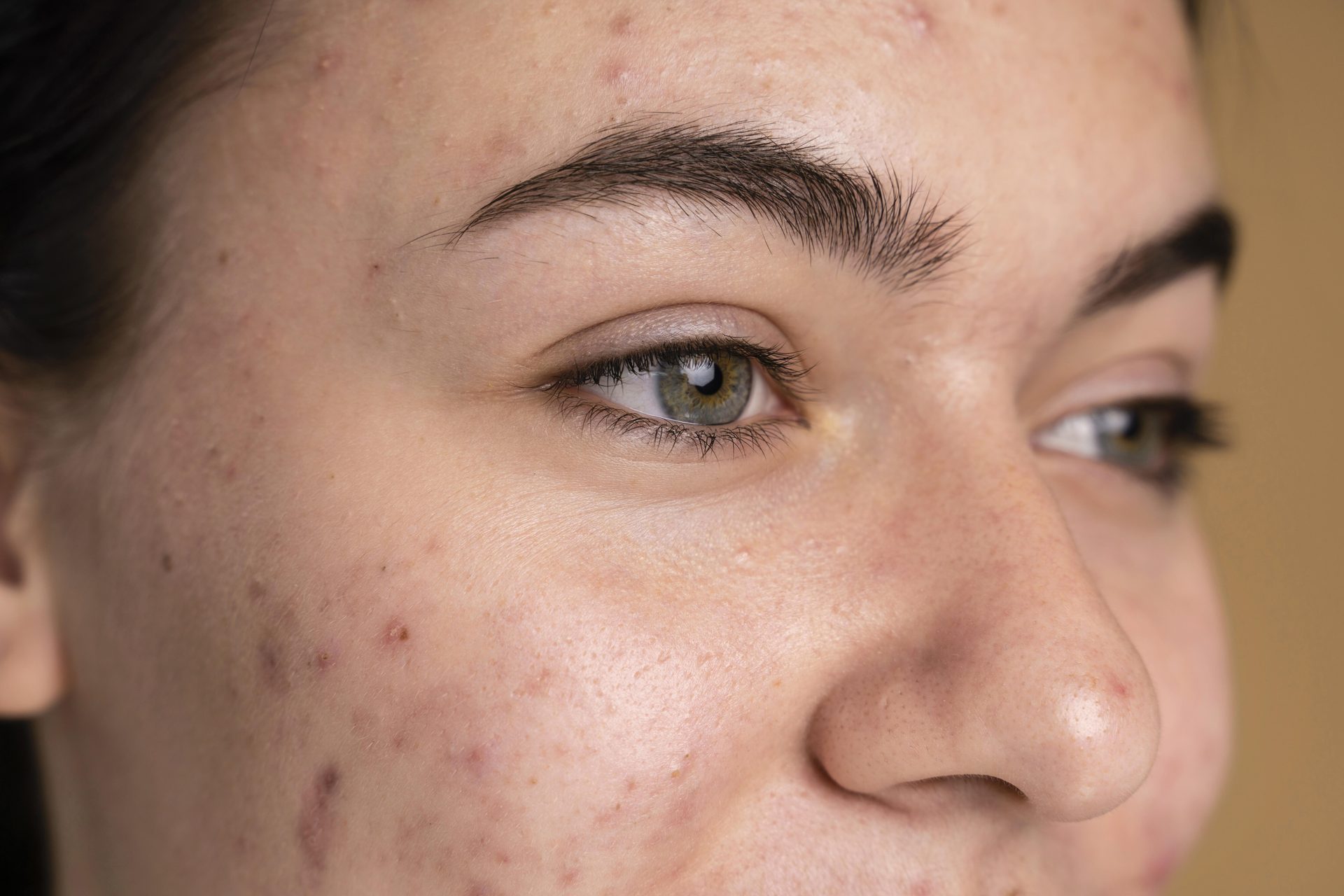
Blemish is a broad word covering several quite different skin conditions, and the treatments do not overlap much. Most blemishes are harmless, and many respond well to the right actives. Identifying which one you have is the first step.
Skin blemishes: an overview
Acne. Not just excess oil. Four factors combine: increased sebum production, abnormal keratinisation plugging the follicle, proliferation of Cutibacterium acnes, and inflammation. Presentations run from non-inflammatory comedones (blackheads and whiteheads) through papules and pustules to nodules and cysts. Blackheads are dark from oxidised sebum and melanin, not from dirt.
Rash. Areas of irritation or discolouration from allergy, contact irritants, infection, insect bites, heat or an underlying condition. Cause determines treatment, so a persistent rash warrants diagnosis rather than a cosmetic.
Hyperpigmentation. Dark patches from excess melanin, driven by UV exposure, hormones, genetics or inflammation. Post-inflammatory hyperpigmentation following acne is especially common.
Cold sores. Fluid-filled blisters near the mouth caused by herpes simplex virus type 1. Viral and recurrent, treated with antivirals rather than cosmetics. Sun exposure is a common trigger.
Scars. Structural changes in the dermis from injury or inflammatory acne. Atrophic (pitted) and hypertrophic (raised) scars are permanent tissue change, distinct from post-inflammatory pigmentation, which is a colour change and does fade.
Using the right cosmetics
Salicylic acid and benzoyl peroxide address different parts of acne. Salicylic acid is oil-soluble and clears follicular plugging, so it suits comedonal acne. Benzoyl peroxide is antibacterial and works on inflammatory lesions. Allow eight to twelve weeks: nothing here works overnight, and abandoning a treatment at four weeks is the most common reason it appears to fail. Benzoyl peroxide bleaches fabric; use white towels.
Support the barrier. Acne actives are drying, and a compromised barrier makes skin more reactive and more inflamed. Use a gentle, low-pH cleanser and a light non-comedogenic moisturiser. To be precise about the mechanism, though: moisturising offsets the side effects of treatment rather than preventing acne. Toners can help with comfort; the "pH-balancing" claim is largely redundant if the cleanser is well formulated in the first place.
For hyperpigmentation, hydroquinone is not the cosmetic answer. It is often named as the strongest option, and it is effective, but it is prohibited in cosmetic products in the EU under Annex II of Regulation (EC) No 1223/2009, and in the US the over-the-counter route was withdrawn in 2020, leaving it prescription-only. It remains available under medical supervision in some markets, with monitoring, because prolonged unsupervised use can cause exogenous ochronosis.
The cosmetic alternatives are well evidenced: alpha arbutin, which inhibits tyrosinase directly; azelaic acid, which also treats the acne driving the pigmentation; niacinamide (Stamin-B3-N); vitamin C; and 4-butylresorcinol.
Licorice extract works through glabridin, a tyrosinase inhibitor that is also anti-inflammatory. That makes it a good fit for post-inflammatory pigmentation, where calming the inflammation is half the job.
Mulberry extract contains mulberroside and related compounds with tyrosinase-inhibiting activity. Reasonable evidence for tone, less for fine lines.
Sun protection is not optional here. UV drives melanin production, so any pigmentation routine without daily broad-spectrum SPF 30 or higher will not hold its gains. This matters most for post-inflammatory hyperpigmentation, which darkens readily with exposure. See ingredients for tone and hyperpigmentation.
Most blemishes are harmless, but see a doctor for anything that does not respond, for cystic or scarring acne (where early prescription treatment prevents permanent scarring) and for any new, changing or non-healing lesion.
Frequently asked
Can I buy hydroquinone in a cosmetic product?
Not in the EU, where it is prohibited in cosmetic products under Annex II of Regulation (EC) No 1223/2009, and no longer over the counter in the US following the 2020 withdrawal of the OTC monograph route. It remains available on prescription in some markets under medical supervision.
What causes acne?
Four factors together: increased sebum production, abnormal keratinisation plugging the follicle, proliferation of Cutibacterium acnes, and inflammation. Effective routines target more than one of them, which is why combination treatment usually outperforms a single active.
Should I moisturise if I have acne?
Yes. Acne actives are drying and a compromised barrier makes skin more reactive and inflamed, which does not help. Choose a light, non-comedogenic moisturiser, but note that moisturising supports the routine rather than treating the acne itself.