2025-12-30 · 4 min read
Industrial dyes in textile industry
The main textile dye classes (direct, acid, basic, reactive, disperse, vat and mordant), which fibres each one bonds to, and why the pairing is not interchangeable.
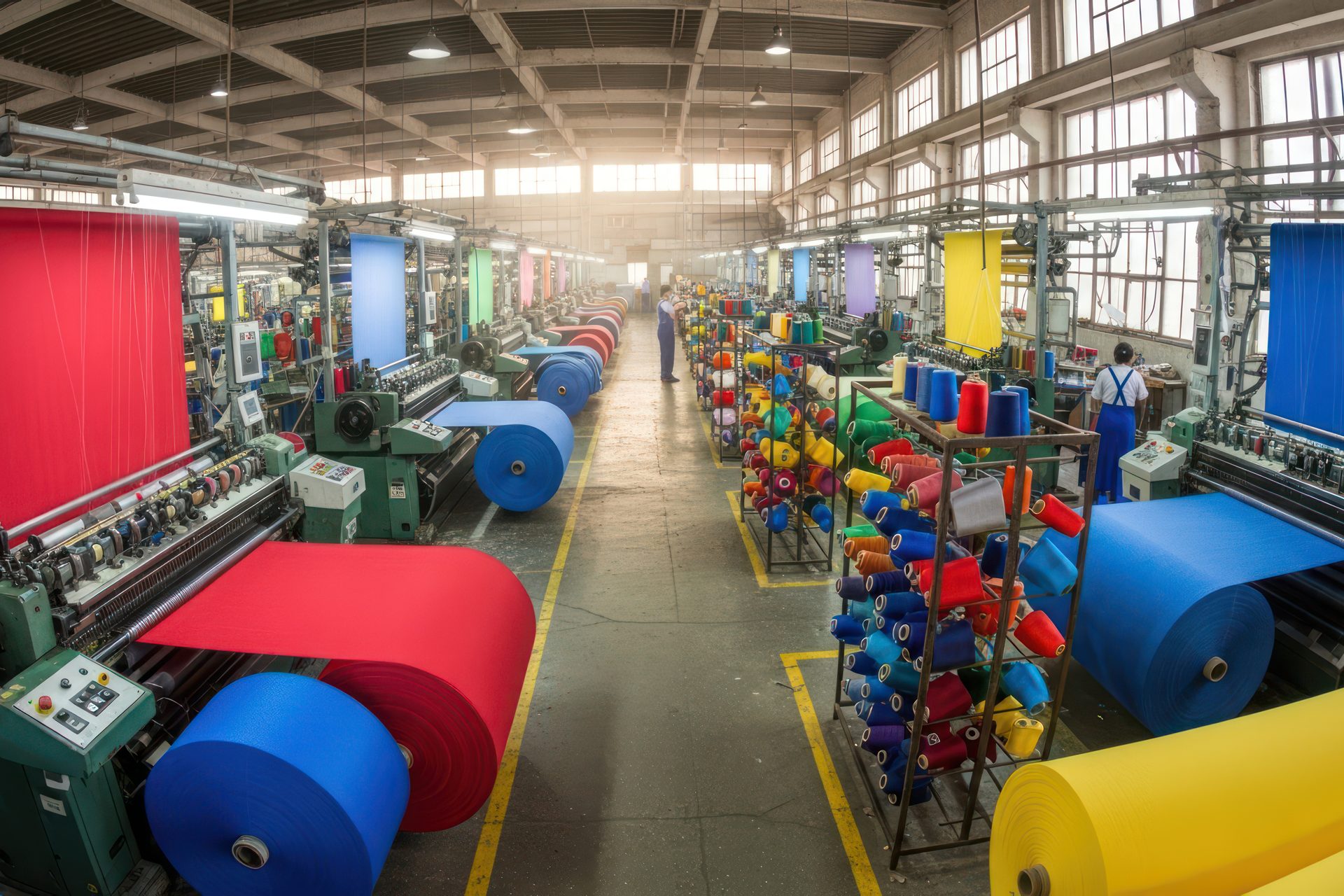
Textiles are the largest single market for industrial dyes, and as global textile output grows the dye sector grows with it. Dyes are used elsewhere too (printing inks, paper, paints, plastics, foodstuffs), but textiles dominate, and that is the focus here.
Textile dyes: salient points
- Dyes colour fabric by bonding to the fibre, which is what distinguishes them from pigments. A dye is soluble and attaches to the fibre chemically or physically; a pigment is insoluble and has to be held in place by a binder.
- Natural and synthetic. Natural dyes come from berries, roots, bark, leaves and insects; synthetic dyes are manufactured. Synthetics dominate industrially for reasons of reproducibility, shade range, fastness and cost: natural dyes are difficult to match batch to batch, and most need mordanting to achieve acceptable fastness.
- Dyeing can happen at several stages: as loose fibre, as yarn, as piece goods, or as finished garments. The choice affects cost, lead time and how late colour can be decided, which is a real commercial consideration in fast-moving fashion.
- Fibre determines dye class. This is the central fact of textile dyeing. A dye class is not a style of colour but a chemistry matched to a fibre type, and the pairings are not interchangeable.
The main dye classes
Direct dyes. Water-soluble, inexpensive and simple to apply to cotton and other cellulosics from a single bath with salt. They bond only by physical forces (hydrogen bonding and van der Waals attraction), which is their limitation: wash fastness is moderate and colours bleed without aftertreatment. Chosen for economy rather than performance.
Acid dyes. Anionic dyes applied from an acidified bath, typically with acetic acid, which is where the name comes from. They bond ionically to the amino groups in protein fibres (wool and silk) and in nylon. They give excellent brightness and a wide shade range on those fibres, and are the standard choice for them.
Basic (cationic) dyes. A distinct class carrying a positive charge, so they bond to anionic sites in the fibre. Their principal modern use is on acrylic, where they give exceptionally brilliant shades with good fastness. They were among the earliest synthetic dyes and are still used in paper. They are easily confused with acid dyes, but the target fibres and the chemistry are different.
Reactive dyes. The most important class for cellulosics. They form a genuine covalent bond with hydroxyl groups in cotton, viscose and linen; the dye becomes part of the fibre rather than sitting on it. That is why wash fastness is so much better than with direct dyes: a reactive-dyed fabric can be laundered with others without bleeding. Bright shades and a wide gamut, at the cost of a more involved process and salt-heavy effluent.
Disperse dyes. Non-ionic and almost insoluble in water, applied as a fine aqueous dispersion. They were developed originally for cellulose acetate, but their dominant use today is polyester, which is hydrophobic and offers no sites for water-soluble dyes. The dye diffuses into the fibre itself at high temperature and pressure. Also used on nylon and acrylic.
Vat dyes. Insoluble dyes reduced to a soluble leuco form for application, then re-oxidised inside the fibre to trap them there. Indigo on denim is the familiar example. Outstanding light and wash fastness on cellulosics, which is why they persist despite a more complex process.
Mordant dyes. These need a metal salt (the mordant) to form a coordination complex bridging dye and fibre. Used on wool, silk and cellulosics, giving good fastness to water, light and perspiration. Mordant choice is critical: the same dye with different mordants produces different shades, so an error changes the colour rather than merely weakening it. Not applicable to polyester, which requires disperse dyes.
Choosing the class is therefore the first decision in any dyeing programme, and it follows from the fibre. For how colourants are identified across industries, see how to read a CI number.
Frequently asked
Which dye class is used for cotton?
Mainly reactive dyes, which form a covalent bond with the cellulose and so give excellent wash fastness. Direct dyes are cheaper and simpler to apply but bond only by physical forces, so they bleed more. Vat dyes, including indigo, are used where very high fastness is needed.
What is the difference between acid dyes and basic dyes?
They are different classes with different targets. Acid dyes are anionic, applied from an acidified bath, and bond to protein fibres such as wool and silk and to nylon. Basic or cationic dyes carry a positive charge and are used mainly on acrylic, where they give exceptionally bright shades.
Why can't polyester be dyed like cotton?
Polyester is hydrophobic and has no sites for water-soluble dyes to bond to. It needs disperse dyes, applied as a fine aqueous dispersion at high temperature and pressure so the dye can diffuse into the fibre itself.