2025-12-30 · 4 min read
CC, BB and DD creams: cosmetic product components and categories
The main cosmetic categories, the functional ingredients every formula needs, and what distinguishes BB, CC and DD creams from one another.
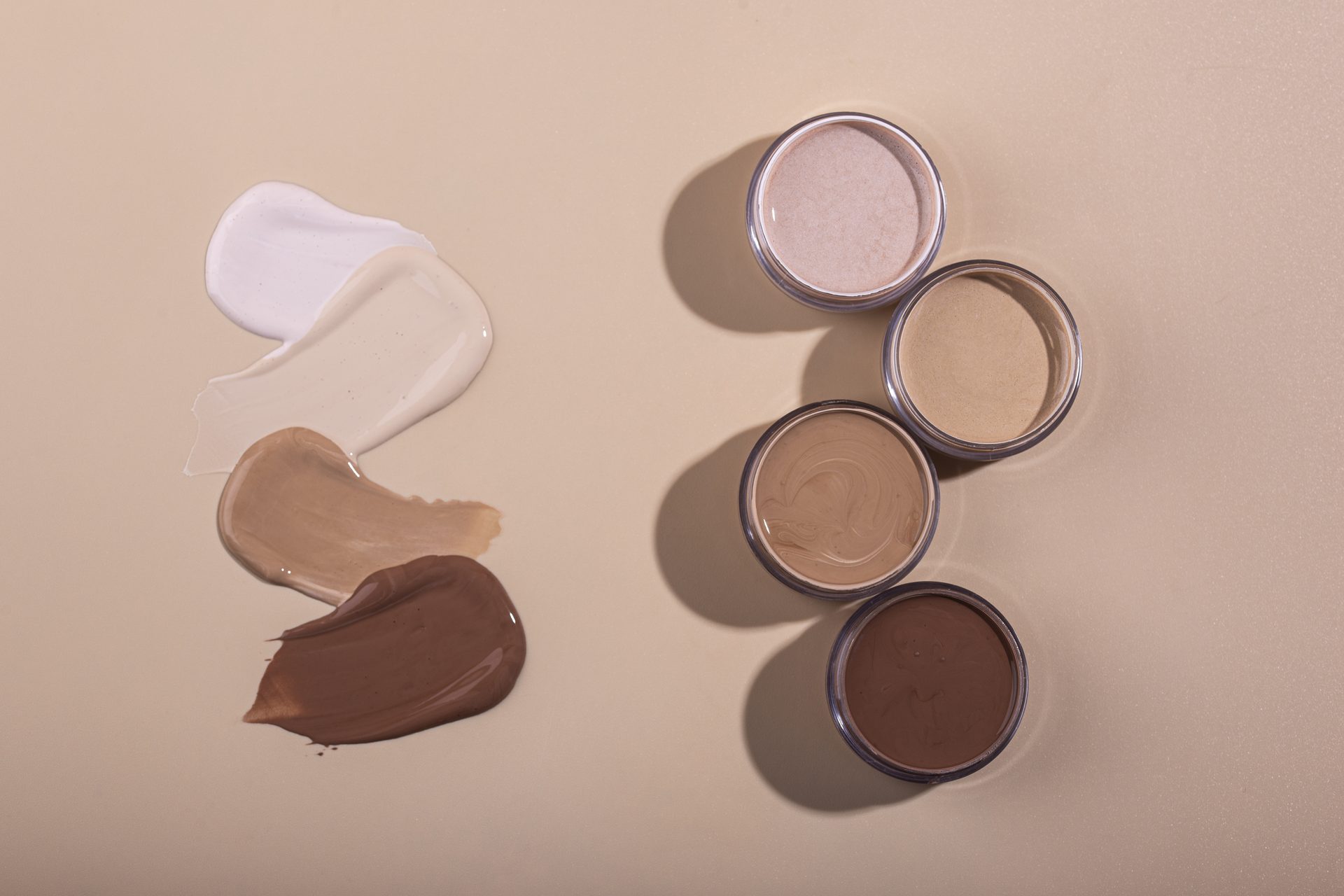
Cosmetic products divide broadly into skincare, hair care, colour cosmetics, fragrance and personal care. Personal care covers oral care, body and hand washes, medicated soaps and shaving products, serving hygiene alongside appearance. Skincare and hair care address condition and appearance over time; colour cosmetics and fragrance work on immediate presentation.
Across all of them, the same functional ingredient classes recur.
What goes into a cosmetic formula
Water, humectants and hydrating agents. Water is the largest component of most formulas and the medium the rest is built in. Humectants (glycerin, sodium hyaluronate, panthenol) bind water into the stratum corneum. Note that humectants work best paired with something that keeps the water there; alone, in dry air, they can draw moisture out of skin.
Emollients. These fill between corneocytes to smooth texture and improve feel. Common in lotions, creams and lipsticks, where they also carry pigment.
Occlusives. Often merged with emollients, though they do a distinct job: forming a surface film that slows water loss. A well-built moisturiser uses all three mechanisms: humectant, emollient and occlusive.
Emulsifiers. These allow oil and water to coexist as a stable emulsion. Without them a cream separates in the jar, which is why they are as fundamental as any active.
Thickeners. These set viscosity and texture, and stabilise the emulsion by slowing the movement of droplets through it. Some contribute moisturising or emulsifying properties alongside.
Preservatives. A safety requirement in any water-containing product, not an optional extra (see the role of preservatives).
pH adjusters and buffers. These hold pH in the range where the formula is stable and the actives function. It matters: vitamin C, hydroxy acids and most preservatives are all pH-sensitive, and an organic-acid preservative above roughly pH 5.5 does nothing at all.
Fragrance. Improves the experience of using a product, and is also the most common cosmetic allergen, which is why fragrance-free variants exist.
Colourants. Both organic dyes and lakes and inorganic pigments such as iron oxides and titanium dioxide. See how to read a CI number.
The problem with long routines
Addressing several concerns has traditionally meant several products applied in sequence, and multiplied across skin types the choice becomes difficult to navigate. Multi-benefit products exist to compress that, which is what BB, CC and DD creams are.
BB, CC and DD creams
Taking the acronyms first:
- BB cream: Beauty Balm or Blemish Balm.
- CC cream: Colour Correcting Cream.
- DD cream: Daily Defence or Dynamic Do-All Cream.
Worth knowing before comparing them: none of these is a regulated category. There is no specification a product must meet to be called a BB cream, so contents vary considerably between brands, and the labels describe positioning rather than a defined formulation.
BB cream
Essentially a tinted moisturiser with light coverage: makeup pigments in a moisturising base, frequently with SPF. Originally developed in Germany for post-procedure skin and popularised in Korea. Suits people wanting evenness rather than coverage.
CC cream
Adds colour correction to the same idea, using complementary tones to neutralise specific issues: green against redness, lavender against sallowness, peach against under-eye shadow. Generally lighter in finish than a BB cream and often more matte, with skincare actives alongside.
DD cream
Combines both, adds anti-ageing actives such as antioxidants and peptides, and often carries a higher SPF. The least standardised of the three, and the label tells you least about the contents, so read the ingredient list rather than the acronym.
One caution worth stating
These products often carry an SPF figure, and it is easy to treat that as sun protection handled. It usually is not. SPF is measured at 2 mg/cm², and people apply tinted creams far more thinly than that, so delivered protection is typically well below the labelled number. If you need real sun protection, apply a dedicated sunscreen underneath. See application techniques for sunscreens.
More generally, a combined product trades some performance in each function for convenience. That is often a good trade (a product used every day beats three that are not), as long as it is made knowingly.
Frequently asked
What is the difference between BB, CC and DD creams?
BB creams are tinted moisturisers with light coverage, often with SPF. CC creams add colour correction for redness or sallowness, usually with a lighter finish. DD creams combine both with anti-ageing actives. None is a regulated category, so the labels indicate positioning rather than a defined specification.
Can a BB cream replace my sunscreen?
Not reliably. SPF is measured at 2 mg/cm², and people apply tinted creams far more thinly than that, so delivered protection is typically well below the labelled figure. Use a dedicated sunscreen underneath if you need real protection.
Why do cosmetic formulas need so many ingredients?
Because each functional class solves a different problem: emulsifiers hold oil and water together, thickeners set consistency, preservatives prevent microbial growth and pH adjusters keep actives in the range where they work. Remove any one and the product fails in a specific way.