2025-12-30 · 4 min read
Understanding the role of active pharmaceutical ingredients (APIs) in drug formulations
What an API is, how it differs from the finished drug product, the GMP and DMF framework behind it, and why the global API supply chain looks the way it does.
Pharma & APIs · Sourcing · Quality & testing
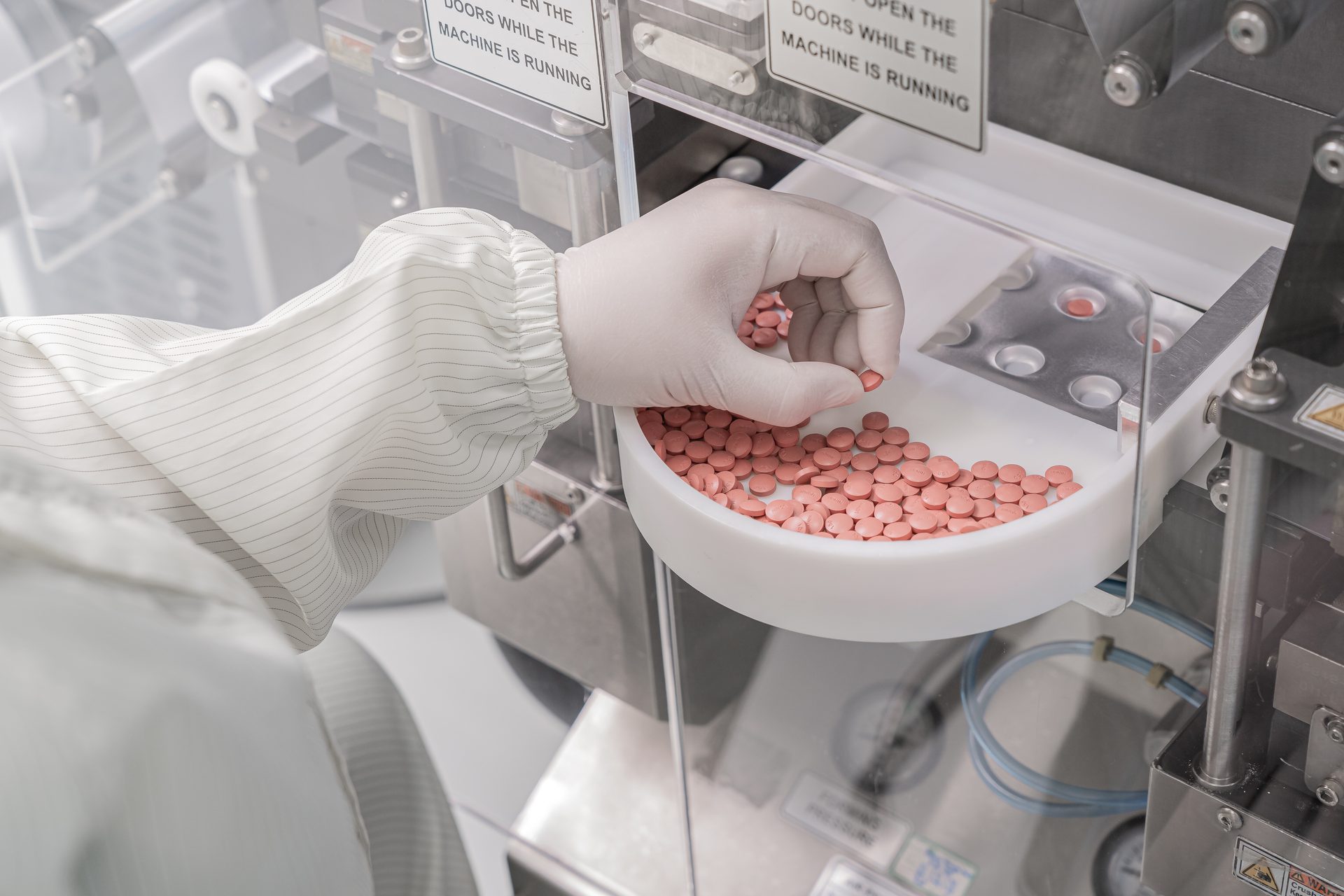
An Active Pharmaceutical Ingredient is the biologically active substance in a medicine, the component producing the therapeutic effect. Everything else in a tablet, cream, capsule or injectable is there to deliver it.
APIs are used across essentially every therapeutic area: oncology, cardiology, neurology, gastroenterology, respiratory medicine, ophthalmology, nephrology and endocrinology among them.
API and drug product
The distinction matters and is often blurred. The API is the active substance. The drug product is the finished medicine: API combined with excipients and formulated into a dosage form.
Excipients are not filler. They control disintegration and dissolution, stabilise the API against moisture and light, mask taste, and give the tablet a colour and shape that allows identification. A well-made API in a poorly designed formulation may not be absorbed at all. See an inactive ingredient is not a passive ingredient.
Generic medicines are usually named after the API (the International Nonproprietary Name), which is why the generic name and the active substance coincide. Combination products carry more than one API, each addressing a different target.
Common APIs and what they do
Familiar examples make the point that an API is defined by a specific pharmacological action:
- Ibuprofen: non-steroidal anti-inflammatory, inhibiting cyclooxygenase.
- Paracetamol/acetaminophen: analgesic and antipyretic.
- Diphenhydramine: antihistamine, also sedating.
- Famotidine: H2 receptor antagonist reducing gastric acid.
- Loratadine: non-sedating antihistamine.
- Guaifenesin: expectorant.
- Dextromethorphan: cough suppressant.
How APIs are regulated
API manufacture is a regulated activity in its own right, not merely a step before the interesting part.
Good Manufacturing Practice governs it: in the EU under Part II of the GMP guide, internationally under ICH Q7. Regulators inspect API facilities directly, wherever in the world they sit, and a failed inspection can halt supply of every medicine depending on that site.
The Drug Master File is the mechanism that makes the commercial relationship work. An API manufacturer submits confidential detail (facilities, synthetic route, process controls, impurity profile, stability data) to the regulator, and a formulator can reference the DMF in its own marketing authorisation application without the manufacturer disclosing proprietary process detail to a customer.
Impurity control is much of the technical work. ICH Q3A sets thresholds for reporting, identifying and qualifying impurities, and residual solvents and elemental impurities have their own guidelines. Genotoxic impurities carry far stricter limits; the nitrosamine recalls of recent years are what happens when this goes wrong at scale.
The global supply chain
India and China dominate global API manufacture, on cost structure, established chemical capacity and decades of specialisation. Many manufacturers operate as dedicated API producers supplying formulators worldwide; others integrate forward into finished products; some do both.
That specialisation has lowered medicine costs substantially, particularly for generics, which is the main reason an off-patent drug costs a fraction of the originator. It has also created concentration risk, visible when a single site's problems ripple through global supply. Several governments introduced domestic-capacity incentives after 2020 for exactly this reason.
Why it matters
A medicine's efficacy and safety depend on the API's identity, purity and consistency, and on the formulation delivering it reliably. That places real weight on API sourcing: GMP compliance, inspection history, documented impurity profiles and batch-to-batch consistency are what a formulator is buying, alongside the molecule. For the equivalent standards on the cosmetic side, see quality standards and the discipline behind every batch.
Frequently asked
What is the difference between an API and a drug product?
The API is the biologically active substance itself. The drug product is the finished medicine: API plus excipients formulated into a dosage form, with the excipients determining stability, release rate, absorption and identification.
What is a Drug Master File?
A confidential submission an API manufacturer makes to a regulator describing its facilities, process, controls and impurity profile. A formulator can reference the DMF in its own application without the manufacturer having to disclose proprietary process detail.
Why are so many APIs made in India and China?
Cost structure, established chemical manufacturing capacity, and decades of specialisation. The concentration reduces drug costs substantially but creates supply-chain risk, which is why several governments have introduced incentives to rebuild domestic capacity.