2025-12-30 · 4 min read
Skin barrier and hydration: cosmetic active ingredients for healthy skin
What the stratum corneum lipid matrix is made of, what damages it, and the actives that repair it: ceramides, niacinamide, glycerin, hyaluronate and allantoin.
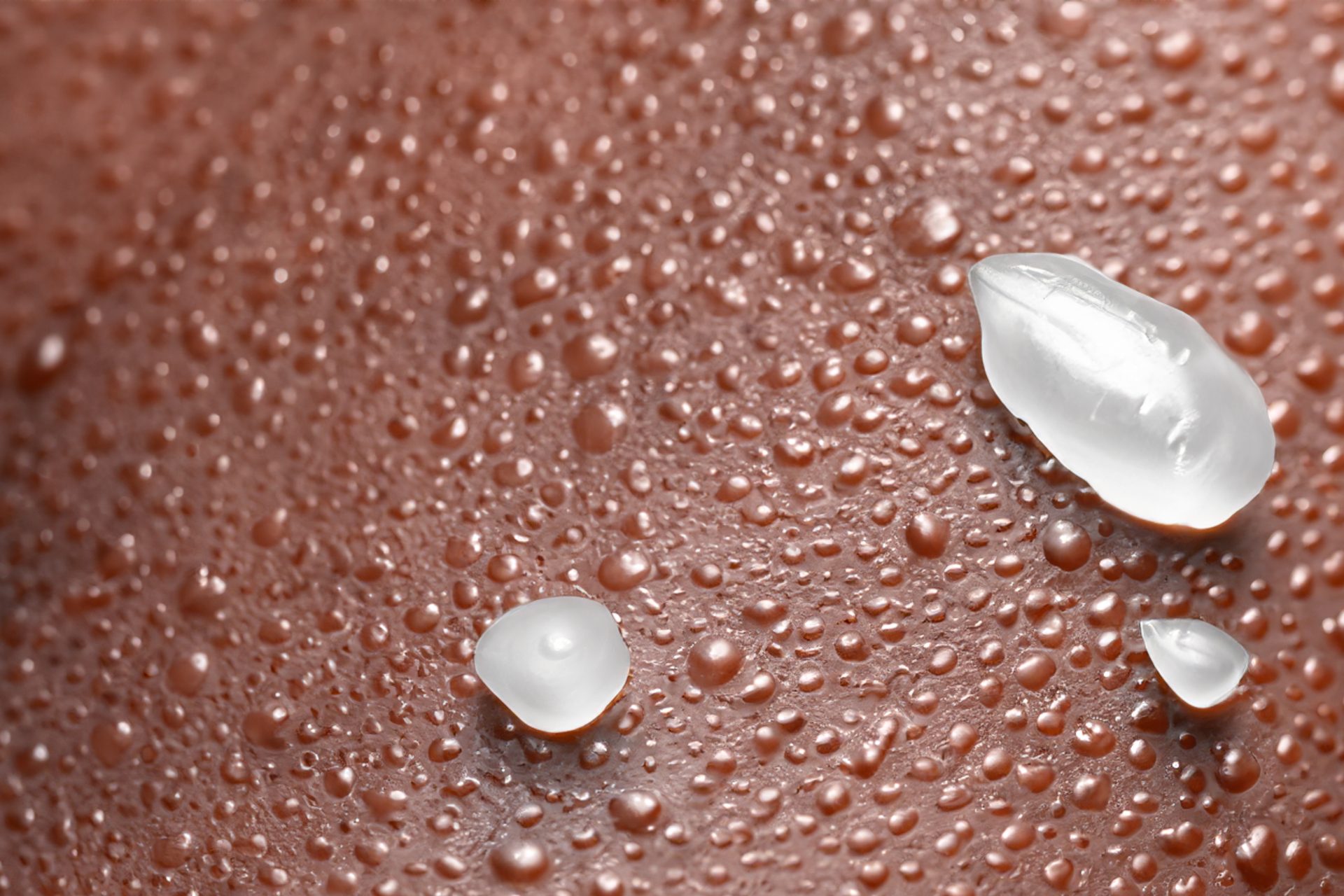
The skin barrier is the stratum corneum, the outermost layer, and it is the reason skin works at all: it keeps water in and keeps pathogens, allergens and irritants out. Compromise it and the consequences are immediate: dryness, redness, stinging, sensitivity and dullness.
What the barrier is made of
The standard analogy is bricks and mortar. The bricks are corneocytes, flattened dead keratinocytes. The mortar is a lipid matrix of three components in roughly equal proportion: ceramides, cholesterol and free fatty acids. The ratio matters: barrier repair formulations aim to supply all three, because in barrier-recovery studies on experimentally disrupted skin (Man et al.), incomplete lipid mixtures delayed recovery, while a complete mixture of all three did not.
The measurable indicator of barrier integrity is transepidermal water loss (TEWL), the rate at which water escapes through skin. A damaged barrier shows elevated TEWL, and the same breaches that let water out let irritants in, which is why barrier damage and sensitivity tend to arrive together.
What damages it
Harsh surfactants and high-pH cleansers strip lipids directly. Over-exfoliation removes corneocytes faster than they are replaced. Hot water, low humidity, friction and UV all contribute. Age reduces lipid production, and conditions such as eczema and psoriasis involve inherent barrier defects, notably reduced ceramide content.
Ceramides
Sphingolipids (not simple fats) making up around half the lipid content of the stratum corneum. They are the structural core of the matrix, and topical ceramides supplement it directly.
Formulation detail worth knowing: ceramides work best delivered with cholesterol and free fatty acids in a balanced ratio. Ceramides alone can be less effective than the complete combination, so the presence of ceramides on an ingredient list is not the whole story.
Hyaluronic acid
A humectant, and precisely that: it binds water, holding many times its weight. What it does not do (a common misstatement) is rejuvenate or replace barrier lipids. It adds water; it does not keep it there.
That distinction is practical. In dry air, a humectant applied alone can draw water out of deeper skin and lose it to the atmosphere. Apply hyaluronate to damp skin and follow with an emollient or occlusive. Molecular weight shapes behaviour: high weight forms a hydrating surface film, while lower weights penetrate the stratum corneum further.
Niacinamide
Vitamin B3 (Stamin-B3-N), and one of the few actives that addresses the barrier at its source: it stimulates the skin's own synthesis of ceramides and other barrier lipids, rather than only supplying them. It also reduces inflammation, regulates sebum and improves tone, and it is stable and well tolerated across a wide pH range. Around 5% is the concentration most commonly studied; higher levels bring no clear benefit and can cause flushing.
Glycerin
The most-studied humectant there is, and among the cheapest. Beyond binding water, glycerin has documented effects on corneocyte maturation and on the aquaporin water channels in skin, which is why it outperforms what a simple water-binding molecule would predict. Effective across skin types and, like all humectants, best paired with something occlusive.
Allantoin
A keratolytic and soothing agent. It promotes gentle desquamation, supports epithelial proliferation, and calms irritation, which makes it useful in barrier-repair and post-procedure formulas. It is well tolerated at low concentrations and often paired with panthenol, which hydrates and soothes through a complementary route.
Repairing a damaged barrier
The most effective step is usually subtraction. Stop exfoliating acids, retinoids and any actives causing stinging. Switch to a gentle, low-pH cleanser and lukewarm water. Then support with a simple moisturiser containing humectants, emollients and occlusives, and give it two to four weeks. The stratum corneum turns over on roughly that timescale, and no ingredient shortens it.
Reintroduce actives one at a time afterwards. See exfoliation and over-exfoliation and a soothing regimen.
Frequently asked
What is the skin barrier made of?
The stratum corneum, the outermost layer, in which flattened corneocytes are embedded in a lipid matrix of ceramides, cholesterol and free fatty acids in roughly equal proportions. The usual analogy is bricks and mortar, with the lipids as mortar.
What damages the skin barrier?
Harsh surfactants, over-exfoliation, high pH cleansers, hot water, low humidity, UV exposure and friction. Age reduces lipid production too, and conditions such as eczema involve inherent barrier defects.
Is hyaluronic acid enough for dry skin?
Usually not on its own. Hyaluronate is a humectant: it binds water but does not hold it in or supply lipids. In dry air a humectant alone can draw water out of skin, so pair it with emollients and occlusives.